

The average cost of desalinated water in 2026 ranges from €1 to €6 per cubic meter, depending on system type, energy source, and location. Solar-powered desalination systems achieve the lowest costs at €1-3 per cubic meter over 15 years, while traditional diesel-powered systems cost €3-6 per cubic meter. These prices include initial investment, operational expenses, and maintenance over the system’s lifetime, with larger installations achieving significantly lower per-unit costs than smaller systems.
Why are water procurement costs draining your resort’s profitability? #
Coastal properties in locations like Curaçao and Belize face water costs reaching €5-10 per cubic meter through traditional supply methods, creating unsustainable operational expenses that directly impact the bottom line. When resorts rely on trucked water delivery or expensive municipal connections, they often spend 15-20% of their operational budget on water alone, forcing difficult choices between maintaining guest amenities and controlling costs. The solution lies in switching to on-site desalination systems that can reduce water expenses by up to 75%, transforming a major cost center into a predictable, manageable expense while ensuring reliable supply even during peak seasons.
What makes energy consumption the hidden killer of desalination economics? #
Traditional reverse osmosis systems consume 7-10 kWh per cubic meter of water produced, creating a double burden through high electricity costs and increased carbon footprints that conflict with sustainability commitments. Properties operating conventional desalination often see energy costs account for 60-70% of their total water production expenses, making the economics unfavorable compared to other water sources. The breakthrough comes from energy recovery technology that reduces consumption to just 3 kWh per cubic meter, cutting operational costs by 70% while meeting the same water quality standards and production volumes.
What is the average cost of desalinated water per cubic meter in 2026? #
Desalinated water costs in 2026 average between €1 and €6 per cubic meter, with significant variations based on technology and scale. Small-scale solar desalination systems producing 5 cubic meters daily cost approximately €3 per cubic meter over 15 years, including a €70,000 initial investment and €1,500 in annual operations. Medium systems generating 20 cubic meters daily achieve €1.5 per cubic meter with a €120,000 investment and €3,000 in yearly costs. Large installations producing 100 cubic meters daily reach the lowest cost of €1 per cubic meter through a €450,000 investment and €12,500 in annual expenses.
Energy source dramatically impacts these costs. Solar-powered systems eliminate ongoing fuel expenses, while diesel-powered units face volatile fuel prices that add €2-3 per cubic meter. Grid-connected systems depend on local electricity rates, typically adding €1.5-2.5 per cubic meter in operational costs alone. The 15-year total cost calculation includes equipment depreciation, maintenance, energy, and replacement parts, providing a comprehensive view of true water production expenses.
What factors determine desalination cost per cubic meter? #
System capacity stands as the primary cost determinant, with larger systems achieving economies of scale that smaller units cannot match. A 100 cubic meter per day system costs 70% less per cubic meter than a 5 cubic meter system due to more efficient component utilization and lower relative maintenance expenses. Energy efficiency ranks second in importance, as systems with energy recovery technology save approximately €7 per cubic meter compared to conventional designs through reduced electricity consumption.
Location-specific factors create additional cost variations. Remote island installations face 20-30% higher costs due to shipping and logistics, while coastal facilities with easy seawater access save on intake infrastructure. Water salinity affects energy requirements, with high-salinity sources requiring 10-15% more energy than standard seawater. Local electricity rates, ranging from €0.15 to €0.40 per kWh globally, can double or triple operational costs between regions.
Technology choices impact both initial investment and long-term expenses. Plug and play solar desalination systems require higher upfront investment but eliminate fuel costs entirely. Chemical-free systems reduce operational expenses by €0.30-0.50 per cubic meter while extending membrane life by 50%. Automation and remote monitoring capabilities add 5-10% to initial costs but reduce labor expenses by 60-80% over the system lifetime.
How does solar desalination compare to traditional desalination costs? #
Solar desalination achieves 50-70% lower lifetime costs than traditional diesel or grid-powered systems despite higher initial investment. While a solar system requires €120,000-450,000 upfront compared to €80,000-300,000 for conventional units, the absence of fuel costs creates immediate operational savings. Solar systems produce water at €1-3 per cubic meter over 15 years, while diesel systems cost €3-6 per cubic meter due to ongoing fuel expenses.
Energy efficiency differences amplify these savings. Solar desalination systems incorporating energy recovery technology consume just 2.7-3 kWh per cubic meter, compared to 7-10 kWh for standard reverse osmosis. This 70% energy reduction translates directly to cost savings, particularly in regions with high electricity rates or limited grid access. The systems operate during daylight hours without batteries, storing produced water rather than energy for 24/7 availability.
Maintenance and reliability factors further favor solar systems. Without diesel engines or complex electrical components, solar units experience 60% fewer breakdowns and require minimal technical expertise for operation. Component lifetime extends significantly, with solar panels lasting 25+ years and pumps designed for 15-year operation in corrosive environments. These reliability improvements reduce both direct maintenance costs and expensive production interruptions.
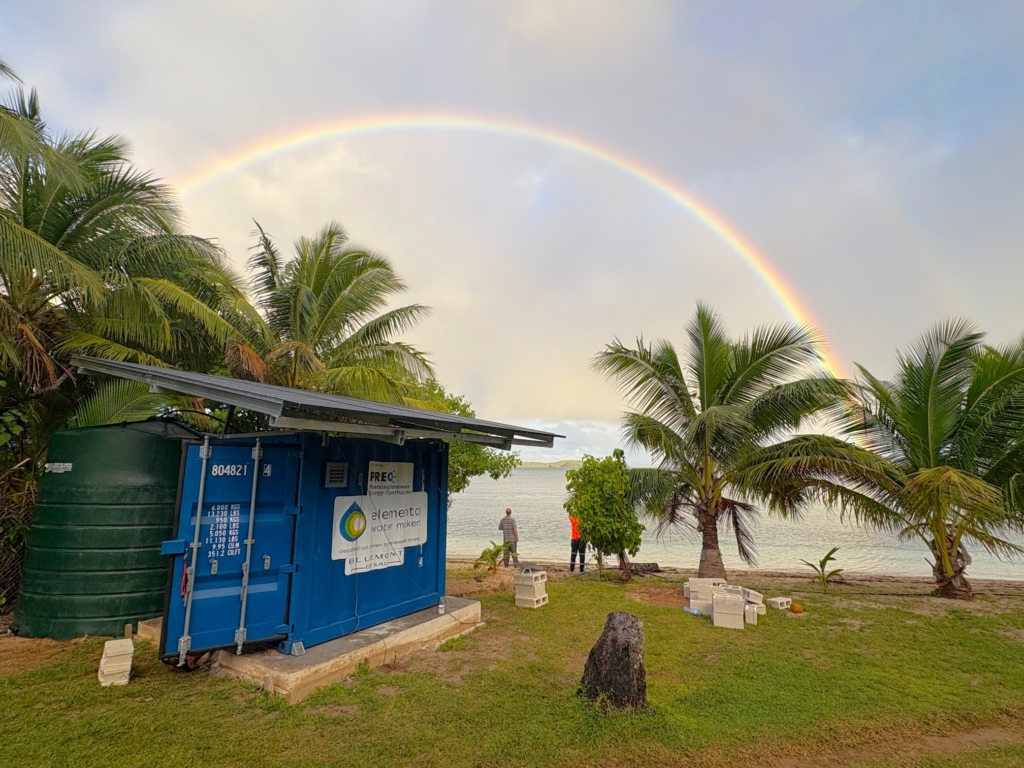
Solar desalination system making 5000 liters per day
Why are desalination costs so different between locations? #
Geographic isolation creates the most dramatic cost variations, with remote islands paying 2-3 times more than coastal mainland facilities. Caribbean resorts face €5-10 per cubic meter for trucked water delivery, while similar properties with on-site desalination produce water for €1.5-3 per cubic meter. Transportation costs for equipment, spare parts, and technical support add 30-50% to project costs in isolated locations, making efficient system design crucial for economic viability.
Local energy infrastructure determines operational economics more than any other factor. Regions with unreliable grid power or diesel-only generation see costs increase by €2-4 per cubic meter compared to areas with stable, affordable electricity. Solar radiation levels affect renewable system sizing, with high-sun locations requiring 30% fewer panels than cloudy regions for the same water output. These variations can change project economics by €20,000-50,000 in initial investment.
Regulatory requirements and water quality standards create hidden cost differences between jurisdictions. Some locations mandate extensive pre-treatment for environmental protection, adding €0.50-1 per cubic meter in operational costs. Permitting processes range from simple notifications to complex environmental assessments costing €10,000-30,000 and delaying projects by 3-12 months. Labor costs for installation and maintenance vary fivefold globally, significantly impacting total project expenses.
How can resorts and private properties reduce desalination costs? #
System optimization through proper sizing and technology selection offers the greatest cost reduction opportunity. Properties consuming 20-50 cubic meters daily often oversize systems by 50-100%, increasing costs unnecessarily. Right-sizing based on actual consumption patterns, including seasonal variations, can reduce initial investment by €30,000-80,000 while maintaining reliable supply. Efficient desalination technology with energy recovery cuts operational costs by 70% compared to standard systems.
Preventive maintenance strategies extend equipment life while reducing emergency repair costs by 80%. Simple practices like automated fresh water flushing prevent membrane fouling without chemicals, extending membrane life from 3-5 years to 7-10 years. Using corrosion-resistant materials like super duplex steel eliminates pump replacements that typically cost €5,000-10,000 annually with standard components. Remote monitoring enables early problem detection, preventing minor issues from becoming major failures.
Financial structuring can transform large capital expenses into manageable operational costs. Spread payment facilities for projects above €100,000 allow properties to match water savings with system payments, achieving positive cash flow from day one. Combining desalination investment with broader sustainability initiatives often unlocks green financing at 2-3% lower interest rates. Properties report average payback periods of 2.5 years when switching from trucked water to on-site solar desalination.
How Elemental Water Makers helps with desalination cost reduction #
We specialize in delivering cost-effective desalination solutions that reduce water expenses by up to 75% compared to traditional supply methods. Our proven approach combines three key innovations that directly address the cost challenges facing resorts and private properties:
- Energy Recovery Technology: Our systems achieve 70% energy savings, reducing consumption from 7-10 kWh to just 2.7 kWh per cubic meter
- Chemical-Free Operation: Automated fresh water flushing eliminates chemical costs while extending membrane life to 7-10 years
- Modular Design: Plug-and-play systems reduce installation time and costs by 50% compared to custom-built solutions
Our comprehensive service package ensures optimal system performance and cost efficiency throughout the 15+ year system lifetime. We provide free location-specific cost analysis showing exact savings potential, complete project planning including permits and site requirements, professional commissioning with operator training, and one year of free operational support with remote monitoring. Properties typically achieve water costs of €1-3 per cubic meter, compared to €5-10 for alternative supply methods.
Ready to reduce your water costs by up to 75%? Contact us for a free cost analysis specific to your location and water needs. We’ll show you exactly how much you can save with solar desalination technology proven in over 100 installations across 35 countries.
Frequently Asked Questions #
What's the break-even point for investing in a desalination system versus continuing with trucked water?
Most properties break even within 2-4 years when switching from trucked water to on-site desalination, with exact timing depending on current water costs and system size. Properties paying €5-10 per cubic meter for trucked water typically see immediate monthly savings that exceed loan payments for the desalination system. The break-even calculation should include not just direct cost savings but also the value of guaranteed water availability during peak seasons and drought conditions.
How do I calculate the right system size for my property to avoid overspending?
Calculate your average daily water consumption over 12 months, accounting for seasonal peaks, then add 20% capacity for future growth rather than the typical 50-100% oversizing. Track water usage for at least 30 days during both high and low seasons, or use 300-500 liters per guest room per day as a baseline for resorts. Professional water audits can identify conservation opportunities that reduce required system size by 20-30%, potentially saving €20,000-50,000 on initial investment.
What are the most common mistakes that increase desalination operating costs?
The three costliest mistakes are neglecting preventive maintenance (increasing costs by €5,000-15,000 annually), using incompatible chemicals that damage membranes (reducing lifespan by 50%), and operating systems at partial capacity which wastes 30-40% more energy per cubic meter. Additionally, failing to monitor feed water quality changes can cause sudden membrane fouling, resulting in emergency replacements costing €10,000-20,000 that proper monitoring would prevent.
Can I retrofit energy recovery technology to my existing desalination system?
Yes, energy recovery devices can be retrofitted to most reverse osmosis systems built after 2010, typically reducing energy consumption by 50-60% and paying for themselves within 18-24 months. The retrofit requires matching the device to your system’s flow rate and pressure specifications, with installation taking 2-3 days. However, systems older than 15 years often benefit more from complete replacement due to multiple efficiency improvements in modern designs.
How do seasonal variations affect desalination costs and what adjustments should I make?
Seasonal demand variations can increase per-unit costs by 40-60% during low occupancy periods when systems run below optimal capacity. Implement variable frequency drives to adjust production to actual demand, saving 30% on energy during low seasons. Consider producing excess water during peak solar hours for storage rather than running systems inefficiently at night, and negotiate seasonal maintenance schedules to coincide with low demand periods.
What financing options make desalination systems cash-flow positive from day one?
Spread payment facilities, green bonds, and equipment leasing programs can structure payments below your current water costs, creating immediate positive cash flow. Many suppliers offer 5-7 year payment plans at 4-7% interest, with monthly payments typically 20-30% lower than current trucked water expenses. Some regions offer sustainability grants covering 20-40% of system costs, while carbon credit programs can generate additional revenue of €2,000-5,000 annually.