

Brine from desalination is typically disposed of by returning it to the sea through a discharge outlet, diluting it with other water streams before release, or managing it through evaporation ponds on land. The right method depends on the scale of the operation, the local environment, and the regulations in place. This article unpacks each aspect of brine disposal, from environmental impacts to reuse opportunities, so you can make informed decisions about your solar desalination system.
Where does brine from desalination actually go? #
Brine from a desalination plant most commonly returns to the sea via a discharge pipe, either directly at the shoreline or further offshore. On land-based or inland installations, operators may use evaporation ponds, deep well injection, or sewer discharge where permitted. The chosen method depends on the plant’s location, size, and available infrastructure.
In seawater desalination, the process concentrates the salt that was originally dissolved in the ocean. For every liter of freshwater produced, a roughly equal volume of high-salinity water is left behind. At large-scale desalination plants, this brine is usually piped offshore and released through diffuser systems designed to encourage rapid mixing with surrounding seawater. Smaller coastal systems often discharge closer to shore, relying on natural tidal movement to dilute the brine.
Evaporation ponds are an alternative used in arid, landlocked settings where ocean discharge is not possible. Water evaporates under the sun, leaving behind a solid salt residue that can then be managed separately. Deep well injection, where brine is pumped into porous rock formations underground, is another option used in some regions, though it carries its own regulatory and geological requirements.
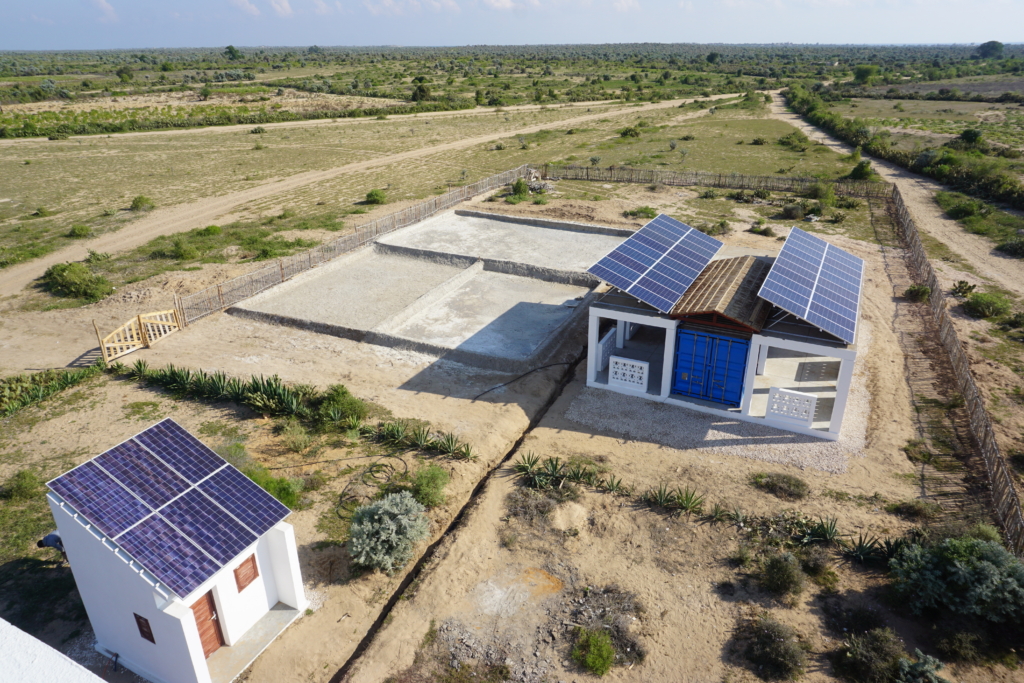
Solar desalination system with evaporation ponds
What are the environmental impacts of brine discharge? #
Brine discharge can raise local salinity levels and reduce dissolved oxygen near the point of release, which may stress marine life if not properly managed. The severity of the impact depends on the concentration of the brine, the volume discharged, the depth and flow of the receiving water body, and the sensitivity of nearby ecosystems such as seagrass beds or coral reefs.
When brine settles on the seabed without adequate mixing, it creates a dense, oxygen-poor layer that can harm bottom-dwelling organisms. Sensitive habitats are particularly vulnerable because they rely on stable salinity and oxygen conditions. This is why discharge design matters so much. Diffuser systems that spread brine across a wide area and encourage turbulent mixing significantly reduce the footprint of any localized impact.
It is also worth noting that the chemicals used in conventional desalination processes, such as antiscalants and biocides, can add to the environmental burden of brine. Systems that operate without any chemical additives avoid this problem entirely, limiting the discharge to concentrated seawater with no additional pollutants.
How do small-scale desalination systems handle brine differently? #
Small-scale desalination systems produce far lower volumes of brine than industrial plants, which makes disposal considerably more manageable. A system producing between 5,000 and 100,000 liters of freshwater per day generates a proportionally modest brine stream that can often be discharged directly back into the sea near the intake point without significant environmental disruption.
For coastal resorts, island communities, or remote villas, the brine outlet is typically a short pipe returning the concentrated seawater to the ocean. Because the volume is small relative to the surrounding water body, natural dilution occurs quickly. Compact systems also tend to have a minimal physical footprint, with a typical small solar desalination installation occupying around 25 to 50 square meters in total, including the brine management components.
Chemical-free operation is another important factor at this scale. Systems that use no chemicals in the desalination process ensure that the brine returned to the sea is simply saltwater, with no added substances that could affect marine life. This makes the environmental profile of small-scale systems considerably cleaner than their larger industrial counterparts.
What regulations govern brine disposal from desalination plants? #
Brine disposal from a desalination plant is regulated at the national and regional level, and requirements vary significantly between countries. Most regulatory frameworks require operators to obtain a discharge permit, demonstrate that brine concentrations at the point of release remain within acceptable limits, and in some cases conduct an environmental impact assessment before commissioning a new system.
In the European Union, brine discharge is subject to the Water Framework Directive, which sets standards for protecting coastal and marine water quality. In other regions, such as the Caribbean or Pacific islands, local environmental agencies set their own thresholds and permitting processes. These requirements can involve submitting technical data about the system’s output volume, salinity levels, and the proposed discharge location.
Elemental Water Makers can help with submitting the technical data that may be required to apply for permits locally. Understanding local rules early in the planning process prevents delays and ensures the system operates in full compliance from day one.
Can brine from desalination be reused or turned into a resource? #
Yes, brine from desalination can be reused or valorized in several ways. The most straightforward application is using the concentrated saltwater in aquaculture, where higher salinity environments suit certain species. At larger scales, brine can be processed further to extract minerals such as sodium chloride, magnesium, and lithium, turning what was once a waste stream into a commercially valuable product.
Brine-to-resource approaches are still emerging at the industrial level, but the concept is gaining traction as water scarcity and resource efficiency become higher priorities globally. Salt harvesting from evaporation ponds is the most established form of brine reuse, particularly in regions where solar evaporation is effective year-round. Research into extracting higher-value minerals from brine is ongoing, with the goal of making desalination more economically and environmentally sustainable over time.
At smaller scales, the practical options are more limited, but the reduced volume of brine makes the disposal challenge far less pressing. The focus for small-scale operators is typically on responsible discharge rather than resource recovery, ensuring that the brine returned to the sea has no negative impact on the surrounding environment.
How Elemental Water Makers helps with brine disposal #
Managing brine responsibly is a core part of designing a well-functioning desalination system, and we build that consideration into every solution we deliver. Our systems are engineered to minimize brine-related environmental impact from the ground up, with chemical-free operation ensuring that what goes back into the sea is nothing more than concentrated seawater.
- Chemical-free brine: Our systems use no antiscalants, biocides, or other additives, so the discharge contains no pollutants beyond salt concentration.
- Compact design: With a small total footprint, our systems are suited to coastal sites where space and environmental sensitivity are both concerns.
- Permitting support: Elemental Water Makers can help with submitting the technical data that may be required to apply for permits locally.
- WHO-standard water quality: Our systems produce water that meets WHO drinking water standards, while the brine byproduct is managed to meet local discharge requirements.
- Remote monitoring: Our systems include remote monitoring capabilities, allowing operators to track performance and discharge conditions continuously.
Whether you are planning a new installation or evaluating an existing setup, we are here to guide you through every step, including brine management. Explore our efficient desalination solutions or get in touch with our team to discuss the right approach for your location.
Frequently Asked Questions #
How far offshore does a brine discharge pipe need to be placed for a small-scale coastal system?
For small-scale systems producing under 100,000 liters per day, the discharge pipe does not need to extend far offshore — in many cases, a short pipe reaching below the low-tide mark is sufficient, provided natural tidal currents ensure adequate dilution. The exact distance depends on local regulations, seabed sensitivity, and the salinity of the discharge. Working with a system provider who can supply the technical data for your permit application will help you determine the minimum compliant distance for your specific site.
What salinity level does the brine discharge typically reach, and is it dangerous to marine life?
Brine from a typical reverse osmosis desalination system is roughly 1.5 to 2 times the salinity of the source seawater, meaning discharge from seawater at 35 ppt may range between 50 and 70 ppt. At the point of release, this concentrated stream can stress marine organisms if it pools without mixing — but with proper diffuser design or natural tidal dilution, salinity levels normalize rapidly within a short distance. Chemical-free systems limit the risk further by ensuring the only stressor is salt concentration, with no added biocides or antiscalants.
Can I discharge brine into a municipal sewer system instead of the sea?
In some jurisdictions, small-scale operators are permitted to discharge brine into a municipal sewer system, but this is subject to strict local wastewater authority rules and typically requires pre-approval. Sewer discharge is more commonly accepted for brackish water systems than seawater desalination, since the salt load can interfere with biological wastewater treatment processes. Always check with your local authority before choosing this route, as unauthorized sewer discharge can result in fines and forced shutdowns.
What happens to brine disposal if my desalination system is located inland, away from the coast?
Inland locations present the greatest brine management challenge because ocean discharge is not an option. The most practical alternatives are evaporation ponds, where solar energy evaporates the water and leaves behind a dry salt residue, or deep well injection into suitable geological formations. In some cases, treated brine can be discharged to a municipal sewer if local rules permit and the volume is low enough. Planning brine disposal should begin at the site assessment stage for any inland installation, as it directly influences system sizing and overall project feasibility.
How do I know if my brine discharge is compliant with local environmental regulations?
Compliance typically requires obtaining a discharge permit from the relevant national or regional environmental authority, which involves submitting technical data such as output volume, discharge salinity, and the proposed outlet location. Conducting a baseline environmental assessment of the receiving water body before installation strengthens your permit application and demonstrates due diligence. Partnering with your system supplier to prepare this documentation — as Elemental Water Makers offers — is the most efficient way to ensure nothing is missed before commissioning.
Are there any common mistakes operators make when managing brine from a small desalination system?
One of the most frequent mistakes is treating brine disposal as an afterthought rather than integrating it into the system design from the start, which can lead to costly retrofits or permit delays. Another common error is placing the brine outlet too close to the freshwater intake, which over time raises the salinity of the source water and reduces system efficiency. Finally, operators using chemical-based systems sometimes underestimate the cumulative environmental effect of additive-laden brine, particularly in enclosed or low-flow coastal areas — a problem that chemical-free systems avoid entirely.
Is brine disposal something I need to plan for before purchasing a desalination system, or can it be figured out afterward?
Brine disposal should be evaluated before purchasing a system, not after — it directly affects site selection, system sizing, permitting timelines, and in some cases whether a project is viable at all. Identifying your discharge method early allows you to design the outlet infrastructure correctly from day one and avoid regulatory surprises that could delay your launch. A reputable supplier will include brine management as part of the initial site consultation, ensuring the full water production and disposal cycle is accounted for in the project plan.