

The cost of desalinating ocean water typically ranges from €0.50 to €3.00 per cubic meter (1,000 liters) for large-scale industrial plants, while small-scale systems can run higher depending on the energy source and location. For smaller, decentralized installations, total project costs generally fall between €40,000 and €400,000, depending on system size and site conditions. The sections below break down the key cost drivers, energy considerations, and the most affordable approaches for small-scale solar desalination.
What factors determine the cost of ocean water desalination? #
The cost of seawater desalination is shaped by several interconnected factors: energy consumption, system scale, technology type, location, and ongoing maintenance. No two installations carry the same price tag, because each of these variables shifts the overall equation significantly.
The most influential cost drivers include:
- Energy source and consumption: Conventional grid-powered systems carry ongoing electricity costs that accumulate over the system’s lifetime. The energy required to push seawater through reverse osmosis membranes is substantial, and electricity prices in coastal and island regions are often among the highest anywhere.
- System capacity: Larger systems benefit from economies of scale, reducing the cost per liter produced. Smaller systems serving individual resorts, villas, or remote communities have higher per-liter costs but lower upfront investment.
- Location and logistics: Remote islands or coastal areas with limited infrastructure add costs for transportation, access, and skilled labor during installation.
- Permitting and compliance: Depending on the jurisdiction, permits for seawater intake and brine discharge may be required, adding time and administrative cost to a project.
- Maintenance requirements: Systems that require frequent chemical treatments, membrane replacements, or specialist servicing carry higher lifetime costs than low-maintenance alternatives.
Understanding these factors before investing helps you select a system that fits your budget over the long term, not just at purchase.
How much does it cost per liter to desalinate seawater? #
At large industrial scale, the cost of desalinating seawater typically falls between €0.50 and €1.50 per cubic meter (roughly €0.0005 to €0.0015 per liter). At small scale, costs are higher, often ranging from €1.50 to €5.00 per cubic meter, depending on energy costs and system efficiency.
For context, a small-scale system producing between 5,000 and 100,000 liters per day sits in a project investment range of roughly €40,000 to €400,000. The per-liter cost over the system’s lifetime depends heavily on how much energy the system consumes and what that energy costs locally.
It is worth noting that comparing desalination costs against alternatives like trucked-in water or bottled water often reveals that desalination is significantly more affordable over time. In many coastal and island settings, trucked or bottled water can cost several euros per liter, making a dedicated desalination system a financially sound long-term investment.
Why is energy the biggest expense in seawater desalination? #
Energy is the dominant cost in seawater desalination because the reverse osmosis process requires high-pressure pumps to force seawater through semi-permeable membranes, separating salt from freshwater. This pressurization is energy-intensive by nature, and in many coastal regions, grid electricity is expensive or unreliable.
In conventional desalination systems without energy recovery, electricity can account for 50 to 60 percent of the total operating cost. Modern systems address this through energy recovery devices, which capture and reuse the pressure energy from the concentrated brine stream that exits the membrane. This technology, originally developed for large industrial plants, is now adapted for smaller systems and can deliver energy savings of up to 70% compared to conventional approaches.
For locations with high electricity tariffs, such as remote islands or off-grid coastal communities, the energy cost difference between an efficient and an inefficient system can represent tens of thousands of euros over the system’s operational life. This is why energy efficiency is not just an environmental consideration but a core financial one.
Does solar-powered desalination cost less than conventional methods? #
Solar-powered desalination can significantly reduce operational costs compared to grid-powered systems, particularly in sun-rich coastal regions where electricity is expensive. By using free solar energy as the primary power source, the ongoing energy cost of running the system drops dramatically, lowering the cost per liter produced over time.
The upfront investment for a solar desalination system is higher than a basic grid-connected unit because it includes the solar power components. However, in locations where grid electricity is costly or simply unavailable, the total cost of ownership over 10 to 15 years typically favors the solar-powered approach.
A practical consideration is space. A typical small-scale solar desalination system requires around 25 to 50 square meters of total space for the system and its power components. Installation time varies with system size: smaller systems can often be operational within a few days, while larger installations may take several weeks.
For permitting, requirements vary by country and region. Elemental Water Makers can help with submitting the technical data that may be required to apply for the permits locally.
What is the cheapest way to desalinate ocean water at small scale? #
The most cost-effective approach to small-scale seawater desalination combines reverse osmosis technology with energy recovery and, where feasible, solar power. This combination minimizes both capital expenditure and ongoing operating costs, delivering the lowest lifetime cost per liter for decentralized installations.
Key principles for keeping costs down at small scale:
- Choose systems with built-in energy recovery: Energy recovery devices dramatically reduce electricity consumption, which is the largest recurring expense in any desalination system.
- Opt for modular, plug-and-play designs: Pre-engineered, containerized systems reduce installation complexity, shorten deployment time, and minimize the need for expensive on-site engineering work.
- Avoid chemical-dependent systems: Systems requiring regular chemical dosing add ongoing costs and logistical challenges, particularly in remote locations. Chemical-free systems reduce both expense and environmental impact.
- Prioritize remote monitoring: Systems with remote monitoring capabilities allow issues to be identified and resolved without the cost of frequent on-site service visits.
- Match system size to actual demand: Oversizing a system increases upfront cost without benefit. A well-matched system operating at consistent capacity is more efficient and cost-effective than an oversized one running at partial load.
Water produced by well-designed small-scale reverse osmosis systems meets WHO drinking water standards, making this approach not only affordable but safe and reliable for communities, resorts, and industries alike.
How Elemental Water Makers help with affordable seawater desalination #
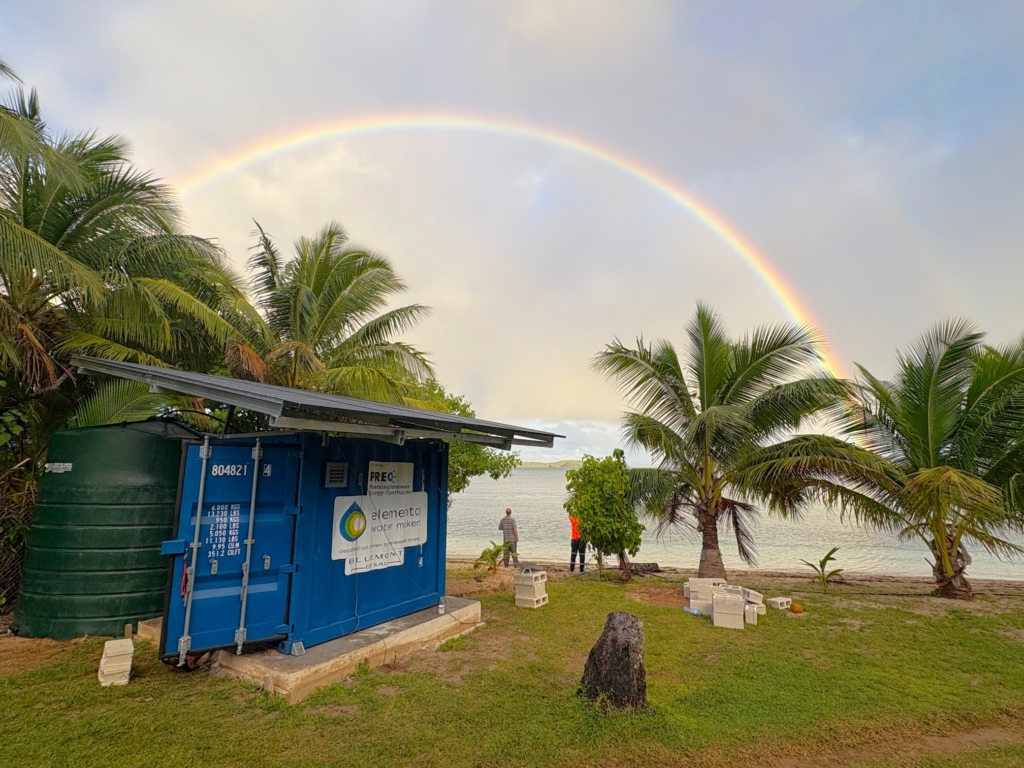
We design and supply small-scale desalination systems built specifically for coastal and island environments where water is scarce and energy is expensive. Our two flagship solutions address the full range of small-scale needs: the off-grid Elemental Water Source for remote locations running on solar power, and the Efficient Water Maker for commercial applications with grid access.
Here is what makes our approach cost-effective:
- Up to 70% energy savings through advanced energy recovery technology adapted from large-scale industrial plants
- Plug-and-play, containerized design that reduces installation time and on-site costs
- Completely chemical-free operation, eliminating ongoing chemical procurement and handling costs
- Remote monitoring to minimize service visits and keep maintenance costs low
- Systems proven to operate reliably for over 15 years in harsh coastal conditions, maximizing the return on your investment
- Water that meets WHO drinking water standards
With over 100 installations across 35 countries, we have the experience to help you find the right system for your location and budget. Contact us to discuss your freshwater needs and get a cost estimate tailored to your situation.
Frequently Asked Questions #
How long does it take for a small-scale desalination system to pay for itself?
The payback period for a small-scale desalination system typically ranges from 3 to 7 years, depending on local water costs and energy prices. In locations where trucked or bottled water is being used — which can cost several euros per liter — the savings accumulate quickly and payback can occur even faster. A solar-powered system with energy recovery will generally reach its break-even point sooner than a conventional grid-powered unit due to lower ongoing operating costs.
What maintenance costs should I budget for after installing a desalination system?
For a well-designed small-scale reverse osmosis system, annual maintenance costs typically include periodic membrane inspections, filter replacements, and routine servicing — generally estimated at 5 to 10% of the initial system investment per year. Chemical-free systems significantly reduce this burden by eliminating chemical procurement, dosing equipment maintenance, and safe disposal requirements. Remote monitoring capabilities further reduce costs by allowing many issues to be diagnosed and resolved remotely, avoiding expensive on-site service visits.
Can a desalination system handle brackish groundwater as well as full seawater?
Yes, reverse osmosis technology works for both brackish groundwater and full seawater, but the system specifications differ between the two. Brackish water contains lower salt concentrations and therefore requires less pressure to treat, resulting in lower energy consumption and cost per liter compared to seawater desalination. If your source water is brackish rather than full ocean water, it is worth specifying this to your system supplier, as a correctly sized brackish water RO system will be more efficient and more affordable to operate.
What happens to the brine waste that desalination produces, and does it add to project costs?
Reverse osmosis desalination produces a concentrated brine stream as a byproduct, which must be managed responsibly. For coastal installations, controlled discharge back into the sea at sufficient depth and dilution is the most common approach, but local environmental regulations will dictate the specific requirements. Permitting for brine discharge can add administrative time and cost to a project, which is why it is important to factor this into your planning early — working with an experienced supplier who can assist with the technical documentation for permit applications can simplify this process considerably.
Is a solar desalination system reliable enough for a critical water supply, or should I keep a backup?
Modern solar desalination systems are designed with reliability in mind and can include battery storage or hybrid configurations to ensure continuous operation even during cloudy periods or at night. For critical applications such as a resort, hospital, or community water supply, incorporating a backup power source or a small water storage buffer is a prudent approach. Well-engineered systems proven in harsh coastal environments — such as those with a 15-year operational track record — provide a strong reliability baseline, but discussing your specific uptime requirements with your supplier will ensure the system is configured appropriately.
How do I know what system capacity I actually need before purchasing?
Sizing a desalination system correctly starts with an accurate assessment of your daily water demand, accounting for peak usage periods, seasonal variation, and any planned growth in consumption. A common mistake is oversizing — purchasing a system with significantly more capacity than needed — which increases upfront costs and can reduce efficiency if the system runs consistently below its optimal load. A reputable supplier will conduct a demand assessment with you before recommending a system size, ensuring your investment is matched precisely to your real-world needs.
Are there financing or funding options available for desalination projects, particularly for communities or NGOs?
Yes, various financing routes exist depending on your project type and location. Development banks, climate adaptation funds, and international aid organizations increasingly fund water security infrastructure, particularly for island communities and developing regions facing freshwater scarcity. For commercial projects such as resorts or industrial facilities, equipment financing and leasing arrangements are also available through some suppliers and financial institutions. Discussing your project context early with your system supplier can help identify which funding pathways may be relevant to your situation.