

Desalination is one of the most energy-intensive water treatment processes available, and that energy demand is the single biggest factor driving its cost and environmental footprint. Seawater reverse osmosis, the dominant technology used in modern solar desalination systems, typically consumes between 3 and 10 kilowatt-hours of electricity per cubic meter of freshwater produced. Understanding where that energy goes, and how modern systems are bringing it down, is essential for anyone evaluating desalination as a long-term water solution.
Why does desalination use so much energy? #
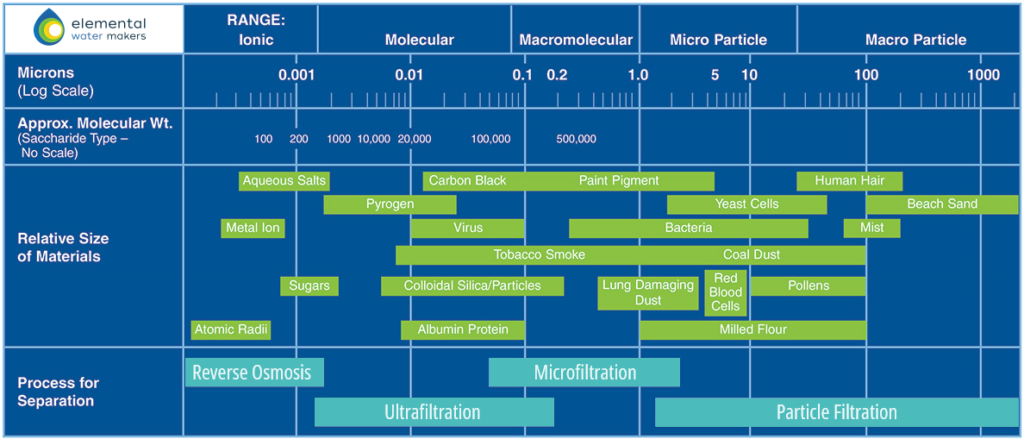
Desalination uses significant energy because forcing seawater through semi-permeable membranes under high pressure requires sustained mechanical work. Salt molecules resist separation from water at the molecular level, and overcoming that osmotic pressure demands continuous energy input. The higher the salt concentration, the more pressure, and therefore more energy, is required to produce clean freshwater.
In seawater reverse osmosis, feed pumps must generate pressures typically ranging from 55 to 70 bar to push water across the membranes. This pressure must be maintained consistently throughout the process. Additional energy is consumed by pre-treatment filtration, which removes suspended particles and biological matter before the water reaches the membranes, and by post-treatment steps that adjust water chemistry to meet drinking water quality standards.
The thermodynamic minimum energy required to desalinate seawater is roughly 1 kilowatt-hour per cubic meter, but no real-world system operates at this theoretical limit. Friction losses, pump inefficiencies, and the need to process more feed water than the volume of freshwater produced all push actual consumption well above this baseline.
How many kWh does it take to desalinate one cubic meter of water? #
Modern seawater reverse osmosis systems consume approximately 3 to 5 kilowatt-hours per cubic meter of freshwater produced when equipped with energy recovery devices. Older or less efficient systems without energy recovery can consume 8 to 10 kilowatt-hours per cubic meter, making energy recovery one of the most impactful upgrades available to any desalination plant.
These figures represent electrical energy at the point of use. When you factor in the energy required to generate that electricity from fossil fuels, the total primary energy footprint is considerably higher. This is precisely why pairing desalination with renewable energy sources, particularly solar, has become such a compelling proposition for off-grid and coastal installations.
For practical planning purposes, a system producing 10,000 liters (10 cubic meters) of freshwater per day at 4 kilowatt-hours per cubic meter requires roughly 40 kilowatt-hours of electricity daily. Scaled up to a 50,000-liter-per-day system, that figure rises to around 200 kilowatt-hours per day, which directly informs the sizing of any solar energy supply.
What’s the difference between large-scale and small-scale desalination energy use? #
Large-scale desalination plants generally achieve lower energy consumption per cubic meter than small-scale systems because they benefit from economies of scale, advanced pressure exchangers, and optimized pump configurations. Industrial-scale plants processing tens of thousands of cubic meters per day can reach energy consumption as low as 3 kilowatt-hours per cubic meter. Small-scale systems historically consumed more energy per unit output, though this gap has narrowed significantly with modern design improvements.
Large-scale desalination plants
Industrial desalination plants serving cities or large industrial users operate with highly optimized energy recovery systems, where the pressure from rejected brine is captured and redirected to assist incoming feed water. At this scale, the capital investment in sophisticated pressure exchangers is easily justified. These plants are almost always grid-connected and rely on consistent baseload power.
Small-scale and decentralized systems
Small-scale systems, typically producing between 5,000 and 100,000 liters per day, face different engineering constraints. However, modern compact systems have adopted scaled-down versions of the same energy recovery technology used in large plants, bringing consumption into a competitive range of 3 to 6 kilowatt-hours per cubic meter. The key advantage of small-scale systems is their ability to integrate directly with solar power, eliminating grid dependency entirely and dramatically reducing operational costs in remote coastal locations.
How does solar-powered desalination reduce energy costs? #
Solar-powered desalination reduces energy costs by replacing purchased electricity with free solar energy generated on-site. Once the solar infrastructure is in place, the marginal cost of each kilowatt-hour drops to near zero, meaning the ongoing operational cost of producing freshwater falls substantially compared to grid-powered or diesel-powered alternatives. In regions with high electricity tariffs or unreliable grid access, the savings can be transformative.
The economics are particularly compelling in coastal and island locations, where both solar irradiance and water scarcity tend to be high simultaneously. A solar desalination system sized correctly for its location can produce freshwater at a fraction of the cost of imported bottled water or trucked-in supplies, with project investments typically ranging from €40,000 to €400,000 depending on system capacity and site requirements.
Solar-powered systems also reduce carbon emissions associated with water production, which is increasingly relevant for resorts, eco-lodges, and communities with sustainability commitments. The water produced meets WHO drinking water standards without relying on fossil fuel energy inputs.
Which desalination technology is the most energy efficient? #
Seawater reverse osmosis with energy recovery is currently the most energy-efficient technology for producing freshwater from seawater at practical scales. It outperforms older thermal technologies such as multi-stage flash distillation and multi-effect distillation, which require heat energy in addition to or instead of mechanical pressure, resulting in significantly higher overall energy consumption per cubic meter.
Thermal desalination processes were dominant for decades and remain in use where waste heat is available from industrial processes or power generation. However, for standalone desalination applications, reverse osmosis consistently delivers lower energy consumption, lower capital costs per unit of output, and greater compatibility with renewable energy sources.
Within reverse osmosis, the efficiency gap between systems with and without energy recovery devices is substantial. Pressure exchangers and turbochargers capture the energy in the high-pressure brine reject stream and transfer it back to the incoming feed water, reducing the net energy demand of the high-pressure pumps by a significant margin. This technology, once exclusive to large industrial plants, is now available in compact formats suited to small and medium-scale systems.
How can desalination systems lower their energy consumption? #
Desalination systems can lower energy consumption through a combination of equipment upgrades, operational optimization, and integration with renewable energy. The most impactful steps include installing energy recovery devices, using high-efficiency pumps, maintaining membrane performance, and shifting energy-intensive operations to periods of peak solar generation.
- Install energy recovery devices: Pressure exchangers or turbochargers recapture energy from the brine reject stream, reducing pump load and cutting overall consumption considerably.
- Use high-efficiency variable-speed pumps: Variable frequency drives allow pumps to operate at optimal speeds for varying feed conditions, avoiding energy waste from fixed-speed operation.
- Maintain membrane integrity: Fouled or degraded membranes require higher operating pressures to achieve the same output, directly increasing energy use. Regular maintenance keeps membranes performing at design specifications.
- Optimize system recovery rate: Adjusting the ratio of freshwater produced to feed water processed can reduce the volume of water that must be pumped and pressurized, improving overall efficiency.
- Integrate with solar power: Running the system during daylight hours when solar generation is at its peak eliminates grid or generator costs and aligns energy availability with production needs.
- Remote monitoring: Continuous performance monitoring allows operators to detect inefficiencies early, before they translate into sustained energy losses or equipment damage.
Small system footprints also contribute to efficiency. A well-designed compact system, typically requiring around 25 to 50 square meters of total space, minimizes pipe runs and pressure losses between components, keeping parasitic energy losses low.
How Elemental Water Makers help with energy-efficient desalination #
We design and deliver solar-powered and grid-connected desalination systems built specifically to minimize energy consumption without compromising output or reliability. Our systems incorporate advanced energy recovery technology adapted from large-scale industrial plants, bringing the same efficiency gains to small and medium-scale installations producing 5,000 to 100,000 liters of freshwater per day.
Here is what sets our approach apart:
- Up to 70% energy savings compared to conventional small-scale desalination, achieved through integrated energy recovery and high-efficiency pump systems
- Off-grid solar operation with our Elemental Water Source, eliminating grid dependency entirely for remote coastal locations
- Grid-connected efficiency with our Efficient Water Maker for commercial applications where electricity access is available
- Completely chemical-free operation for safe, low-maintenance freshwater production that meets WHO drinking water standards
- Remote monitoring capabilities that allow real-time performance tracking and early detection of any inefficiencies
- Proven reliability across more than 100 installations in 35 countries, with systems designed to operate for over 15 years in harsh coastal conditions
If you are evaluating desalination as a water solution and want to understand the energy requirements and costs specific to your location and capacity needs, we are happy to help. Contact us to discuss your project and get a clear picture of what an energy-efficient system would look like for you.
Frequently Asked Questions #
What size solar array do I need to power a small-scale desalination system?
The solar array size depends on your system’s daily water output and local solar irradiance. As a practical starting point, a system producing 10,000 liters per day at 4 kWh/m³ requires roughly 40 kWh of electricity daily — meaning a solar array of approximately 15 to 25 kilowatt-peak (kWp) would be needed in a location receiving 4 to 6 peak sun hours per day. It’s also worth factoring in battery storage or a backup generator to maintain production during cloudy periods, especially if water demand is consistent year-round.
Can a solar desalination system operate continuously, or only during daylight hours?
Most solar desalination systems are designed to operate primarily during daylight hours when solar generation is at its peak, which also happens to be the most energy-efficient window for production. To enable 24-hour operation, battery storage or a hybrid grid/generator backup can be integrated into the system design. Alternatively, many installations use large freshwater storage tanks to buffer supply, producing and storing water during the day to meet demand around the clock without requiring overnight energy storage.
What happens to the brine reject water, and is it harmful to the environment?
Brine reject — the concentrated saltwater stream left after freshwater is extracted — must be managed carefully to minimize environmental impact. In coastal installations, it is typically discharged back into the sea at a controlled rate and location to allow natural dilution, following local environmental regulations. Best practices include diffuser systems that accelerate mixing, careful site selection to avoid sensitive marine habitats, and monitoring salinity levels near the discharge point. Responsible system design treats brine management as an integral part of the project, not an afterthought.
How often do reverse osmosis membranes need to be replaced, and what does that cost?
In a well-maintained system with proper pre-treatment, reverse osmosis membranes typically last between 5 and 10 years before replacement is needed. Membrane lifespan is heavily influenced by feed water quality, pre-treatment effectiveness, and how consistently the system is operated and maintained. Replacement costs vary by system size, but budgeting for periodic membrane replacement is an important part of calculating the true long-term cost of water production — and is far outweighed by the savings from reduced energy consumption in a well-optimized system.
Is solar desalination a viable option for inland locations, or is it only suitable for coastal areas?
Solar desalination using reverse osmosis is specifically designed for seawater or brackish water sources, making it most applicable in coastal, island, or estuarine settings. For inland locations with access to brackish groundwater (typically 1,000–10,000 mg/L total dissolved solids), brackish water reverse osmosis systems are a viable and even more energy-efficient alternative, as lower salt concentrations require significantly less operating pressure. If your inland water source is freshwater with contamination issues, other treatment technologies such as ultrafiltration or UV purification are likely more appropriate and cost-effective.
What are the most common mistakes people make when planning a desalination project?
One of the most frequent mistakes is underestimating feed water variability — seawater quality, temperature, and turbidity can fluctuate seasonally, and a system not designed for these variations will underperform or require costly adjustments. Another common error is oversizing or undersizing the system relative to actual water demand, which affects both capital cost efficiency and daily operational energy use. Finally, neglecting pre-treatment design is a critical oversight: inadequate pre-treatment accelerates membrane fouling, drives up energy consumption, and shortens membrane lifespan — ultimately costing far more than investing in proper pre-treatment from the start.
How do I know if desalination is the right solution for my water needs, or if another technology would be more cost-effective?
Desalination makes the most sense when your only available water source is seawater or high-salinity brackish water, or when the cost of alternative water supply (trucking, bottled water, or grid-connected treatment) is high relative to the investment in a local system. The key evaluation criteria are source water salinity, daily volume requirements, available solar resource, and total project lifecycle cost — not just upfront capital. Engaging a specialist to conduct a site assessment and water quality analysis is the most reliable way to compare options objectively and avoid committing to a technology that doesn’t match your specific conditions.